8th International Workshop on Historical Document Imaging and Processing (HIP’26)
3 September 2026, Vienna, Austria
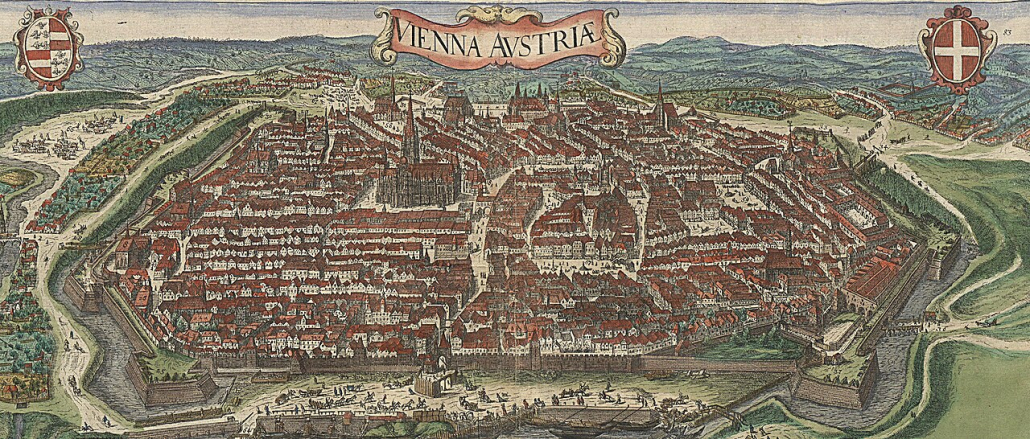
3 September 2026, Vienna, Austria
There have been increased efforts worldwide to digitize our cultural heritage conveyed in historical documents. In this workshop, we bring together researchers from various fields working on document image acquisition, restoration, analysis, indexing, and retrieval to make these documents accessible in digital libraries.
It is the eigth satellite workshop of ICDAR dedicated to this topic, following HIP’11 in Beijing, HIP’13 in Washington, HIP’15 in Nancy, HIP’17 in Kyoto and HIP’19 in Sydney, HIP’21 in Lausanne (hybrid) and HIP’23 in San José, that were a significant success with strong participation.
The workshop is planned for 1 day with oral presentations on September 3rd. Each submission will undergo peer-review and distinguished submissions will be presented orally.
HIP aims to provide the researchers with a forum that is complementary and synergetic to the main sessions at ICDAR on document analysis and recognition. The manifold topics addressed in this workshop encompass the entire processing chain from image acquisition to information extraction. We include the growing importance of machine learning in this processing chain, and we encourage the presentation of entire projects in the context of historical documents.
UPDATE:
The workshop program with accepted papers and session assignments is now published.
Each accepted paper has been allocated 15min for presentation + 5min for questions.UPDATE:
A brief extension to the submission deadline will be granted.
The new deadline is 26 May 2026 AoE.
Submission Deadline: 22 May 2026 (Time zone: Anywhere on Earth)
26 May 2026 (Time zone: Anywhere on Earth)
Acceptance Notification: 22 June 2026
Camera Ready: 7 July 2026
Workshop: 3 September 2026
Venue: TU Wien (Campus Gußhaus – Faculty of Electrical Engineering and IT, Gußhausstraße 27-29, 1040 Vienna, Room EI8)
It is our pleasure to announce that the 8th International Workshop on Historical Document Imaging and Processing (HIP’26) will be held in conjunction with ICDAR2026, on 3 September 2026 in Vienna, Austria.
The workshop brings together researchers working with historical documents and intends to be complementary and synergistic to the work in analysis and recognition featured in the main sessions of ICDAR, the premier international forum for researchers and practitioners in the document analysis community.
Submissions are received until 22 May 2026 26 May 2026 (Time zone: Anywhere on Earth) via CMT and undergo review by the members of the Program Committee.
Submissions must follow the ICDAR guidelines and template provided. It is not required to anonymize the submission, but authors are welcome to do so if they prefer it. Acceptance notifications will be sent out 22 June 2026, with camera ready submissions due on 7 July 2026.
Workshop topics include (but are not limited to):
Imaging and Image Acquisition
Digital Archiving Considerations
Document Restoration/Improving readability
Document Content Acquisition and Information Extraction (within the context of historical documents)
Family History Documents and Genealogies
Automated Classification, Grouping and Hyperlinking of Historical Documents
Digital Humanities applications of document analysis and recognition
Artificial Intelligence and Machine Learning for historical documents
For work focusing on handwriting/paleography, we recommend you have a look at IWCP: 4th International Workshop on Computational Paleography.
The Microsoft CMT service was used for managing the peer-reviewing process for this conference. This service was provided for free by Microsoft and they bore all expenses, including costs for Azure cloud services as well as for software development and support.
Clemens Neudecker
Berlin State Library
Information and Data Management
Potsdamer Strasse 33
10785 Berlin
Germany
clemens.neudecker@sbb.spk-berlin.de
Apostolos Antonacopoulos
PRImA Research Lab
School of Science, Engineering & Environment
University of Salford
Greater Manchester M5 4WT
United Kingdom
a.antonacopoulos@primaresearch.org
Maud Ehrmann
EPFL CDH DHI DHLAB
INN 116 (Bâtiment INN)
Station 14
CH-1015 Lausanne
Switzerland
maud.ehrmann@epfl.ch
Christian Clausner
PRImA Research Lab
School of Science, Engineering & Environment
Newton Building
University of Salford
Greater Manchester M5 4WT
United Kingdom
c.clausner@primaresearch.org
Kai Labusch
Berlin State Library
Information and Data Management
Potsdamer Strasse 33
10785 Berlin
Germany
kai.labusch@sbb.spk-berlin.de
William Barrett
Department of Computer Science
Brigham Young University
Provo, Utah 84604
USA
barrett@cs.byu.edu
09:00 – 17:00 | Workshop
| 09:00-09:10 | Welcome message | |
| SESSION 1: Handwritten Text Recognition Models & Transfer (Chair: Malamatenia Vlachou Efstathiou) | ||
| 09:10-09:30 | MEDUSA: A Curriculum-Based Vision-Language Framework for Multilingual Medieval Handwritten Text Recognition | Théo Moins, Brenna Hensley, Florian Cafiero, Jean-Baptiste Camps, Lilla Conte, Emilie Guidi, Katarzyna Kapitan, Carolina Macedo, Cecile Vermaas, Chahan Vidal-Gorène |
| 09:30-09:50 | Beyond Monolithic OCR: Mixture-of-Experts Specialisation for Ancient Devanagari Script Recognition | Vriti Sharma, Rajat Verma, Rohit Saluja |
| 09:50-10:10 | Is a Generic Dataset and Foundation VLM for Arabic HTR Worth It? Lessons from AMIDDA | Chahan Vidal-Gorène, Noëmie Lucas, Clément Salah, Aliénor Decours-Perez |
| 10:10-10:30 | Language Similarity and Cross-Lingual Transfer in Historical HTR: Evidence from Swedish, Norwegian, and Medieval Latin | Micaella Bruton, Crina Tudor, Wout Sinnaeve, Oreen Yousuf, Signe Rirdance, Raphaela Heil, Beáta Megyesi |
| 10:30-11:00 | Coffee Break | |
| SESSION 2: Document Structure & Segmentation (Chair: Christian Clausner) | ||
| 11:00-11:20 | DIVA-UTP: A Pixel-Level Region Labeling Dataset for Complex Layout Analysis of Medieval Manuscripts | Najoua Rahal, Rolf Ingold |
| 11:20-11:40 | A Diachronic Multi-Type Dataset for Document Layout Analysis from the 17th Century to the Present | Juliette Janès, Sarah Bénière, Benjamin Kiessling, Lucence Ing, Eric Astier, Simon Gabay, Benoît Sagot, Thibault Clérice |
| 11:40-12:00 | Generalization of Text Line Segmentation for HTR in Historical Documents | Gayan Pathirage, Stephan Unter, Simon Corbillé, Elisa Barney Smith |
| 12:00-12:20 | Consistent Line Extraction on Medieval Charters: Mask R-CNN and U-Net Architectures |
Nicolas Renet, Anguelos Nicolaou, Georg Vogeler
|
| 12h20-12h30 | Discussion | |
| 12h30-13h30 | Lunch Break, Campus Gusshaus | |
| SESSION 3: Specialised Text Recognition & Retrieval (Chair: Benjamin Kiessling) | ||
| 13:30-13:50 | Postcorrecting OCR with LLMs: a low resource approach | Valentina Vavassori, Harry Lloyd |
| 13:50-14:10 | Reconstruction Error Ratios for Prototype-Anchored Unsupervised Learning in Optical Character Recognition | Tim Hallyburton, Anna Scius-Bertrand, Arthur Neto, Andreas Fischer, Gernot Fink |
| 14:10-14:30 | Cross-View Retrieval of Byzantine Monograms with Contrastive Representation Learning | Saranga Mahanta, Victoria Eyharabide, Béatrice Caseau, Isabelle Bloch |
| 14:30-14:50 | Diagram Recognition for Byzantine Manuscripts Using a Pretrained nnU-Net | Lilly Osburg, Germaine Götzelmann, Felix Kraus, Danah Tonne |
| 14:50-15:00 | Discussion | |
| 15:00-15:30 | Coffee Break | |
| SESSION 4: Newspaper Analysis & Historical Information Extraction (Chair: Maud Ehrmann) | ||
| 15:30-15:50 | Reading Order Article Coherence Dataset and Measure for Quality Assessment in Historical Newspapers | Kai Labusch, Konstantin Baierer, Michał Bubula, Jana Götze, Jörg Lehmann, Clemens Neudecker, Vahid Rezanezhad |
| 15:50-16:10 | Towards Hierarchical Structure Understanding of Newspaper Images | William Mocaër, Solène Tarride, Thomas Constum, Merveilles Agbeti-Messan, Tom Simon, Clément Chatelain, Stéphane Nicolas, Pierrick Tranouez, Sébastien Cretin, Thierry Paquet |
| 16:10-16:30 | Mapping Armenian Paris: Extracting and Geocoding Commercial Advertisements from the 20th-Century Diaspora Press | Chahan Vidal-Gorène, Seda Kirakosyan, Edita Matevosyan |
| 16:30-16:50 | A Prompt Optimization Framework for Parsing Historical Addresses | Amel Gader, Rafael Patronilo, Mahsa Vafaie, Genet-Asefa Gesese, Harald Sack |
| 16:50-17:00 | Discussion and wrap-up | |
For general enquiries about HIP’26 please contact the organizers.
Copyright © HIP’26 Organizing Committee
Web hosting provided by the Berlin State Library.