Die Stipendiat:innen 2026

Prof. Dr. Pawel Gancarczyk

PD Dr. Stephanie Großmann
Dr. Lisa Källström

Dr. des. Floriana Marra
Dr. Luca di Nardo

Dr. Kris Ramlan

Dr. Elisabeth Rudolph

Dr. des. Julia Steinmetz

Scholarship holder:
Prof. Dr. Pawel Gancarczyk
Additamenta musica: Polyphony in Non-Musical German Manuscripts from the Fifteenth Century
Research efforts in the history of late medieval music have traditionally focused on the study of music manuscripts (such as choirbooks) and, for several decades now, also on fragments. However, music was also recorded in non-musical books, as additions, supplements or fillers to their primary content. The project aims to examine three manuscripts from the Staatsbibliothek which, while primarily non-musical in nature, contain small sections of music. In addition, information will be gathered on similar fifteenth-century manuscripts preserved in other German libraries.
About the scholarship holder
Paweł Gancarczyk is an Associate Professor at the Institute of Art of the Polish Academy of Sciences (Warsaw), where he serves as Head of the Department of Musicology and Editor-in-Chief of the journal ‘Muzyka’. His main research interests include the musical culture of Central Europe in the fifteenth and sixteenth centuries, manuscript studies, and early music printing. His critical edition of works by Petrus Wilhelmi de Grudencz (b. 1392) is scheduled for publication in 2026.
Stabi Collections
Abteilung Handschriften und Historische Drucke:
Ms. Germ. qu. 1745
Ms. Lat. 4º 46
Ms. Theol. Lat. 4º 100
Scholarship holder:
PD Dr. Stephanie Großmann
Skalierte Räume. Kartographische Miniaturen auf Buchumschlägen und im Paratext
Wie werden großräumige Territorien im Kleinformat dargestellt? Das Projekt untersucht kartographische Darstellungen auf Buchumschlägen, Schutzumschlägen sowie in paratextuellen Bereichen wie Vorsatzkarten, Kapitelvignetten oder Itinerar-Listen. Im Zentrum steht die Frage, wie solche kartographischen Miniaturen große Räume sichtbar und verhandelbar machen: als Umriss, als Grenzraum oder als Route. Dabei wird Kartographie nicht als bloße Abbildung, sondern als Verfahren der Ordnung verstanden: Sie wählt aus, fasst zusammen und generalisiert — im Kleinformz besonders deutlich. Paratexte rahmen zudem die Lektüre und bieten noch vor dem ersten Satz interpretative Leitplanken.
Der historische Fokus reicht von der Gründung des Deutschen Reiches bis in die Gegenwart. Besondere Aufmerksamkeit gilt den Umbruchphasen — vom Kaiserreich über die Weimarer Republik und die Zwischenkriegszeit bis zur deutschen Teilung unc Wiedervereinigung —, in denen sich die politischen und territorialen Veränderungen und die damit einhergehende Frage nach ihrer Dauerhaftigkeit auch in den kartographischen Darstellungen niederschlagen. Grenzen, Zugehörigkeiten und Zentren werden markiert, umgeordnet oder weggelassen. Anhand charakteristischer Umschlaggestaltungen und Reiseparatexte werden ikonische Verfahren wie Umriss, Grenzlinie, Route, lnset/Zoom und Netzschemata analysiert und hinsichtlich ihrer geographischen und kulturgeschichtlichen Bedeutungen befragt.
Es werden sowohl die visuellen Mittel (Skalierung, Ausschnitt, Linienführung, Farbdisposition, Verhältnis von Typografie und Bild) als auch material- und produktionsgeschichtliche Aspekte (Druck, Prägung, serielle Gestaltung) untersucht. Ziel ist ein präziser Blick auf die Bildsprache der kartographischen Miniatur am Buch: Wie schaffen es wenige Linien und Flächen, einen ganzen Raum plausibel darzustelle — und wie prägen solche Darstellungen unsere Vorstellungen von „Deutschland“ als Territorium und als Imagination?
About the scholarship holder
Stabi Collections
Im Zentrum der Recherche stehen drei Bestandskomplexe der Staatsbibliothek zu Berlin:
- Einbandsammlung (Handschriften und Historische Drucke): Nachweise von Einband- und Schutzumschlägen mit kartographischen Motiven, serielle Gestaltunger und zustands-/variantenbewusste Exemplare—eine für das Projekt zentrale, anderswo seltene Überlieferung, da Schutzumschläge häufig nicht erhalten sind.
- Kartographische Materialien und Kriegskarten (Kartenabteilung): Vergleichskarten (u. a. Generalstabskarten), Projektionen und Grenzverläufe zur fachlichen Einordnung der Umschlag- und Vorsatzdarstellungen, insbesondere für die Zeiträume Kaiserreich/Weimar/Zwischenkriegszeit.
- Sammlung „Krieg 1914″ (Allgemeine Druckschriften)
Scholarship holder:
Dr. Lisa Källström
Ästhetik der Subversion in kleinen Formen: Illustrationen im DDR-Kinderbuch am Beispiel von Karlsson vom Dach
Elizabeth Shaws Originalillustrationen zu Karlsson vom Dach (DDR, 1974) gehören zu den bislang kaum untersuchten Schätzen der Kinderliteratur. In der Kinder- und Jugendbuchabteilung der Staatsbibliothek zu Berlin sind 30 dieser Illustrationen erhalten, die zeigen, wie „kleine Formen“ narrative, ästhetische und ideologische Bedeutung zugleich transportieren. Shaw, die zuvor für das satirische Magazin Ulenspiegel arbeitete, überträgt ihre Erfahrung aus der Erwachsenenillustration in die Gestaltung von Kinderbüchern: Linienführung, Leerstellen, Minimalismus und punktuelle Komik eröffnen subtile Reflexionsräume, in denen Leser:innen aktiv mitdenken und interpretieren.
Das Projekt untersucht drei zentrale Fragen: Wie funktionierte Kulturtransfer im Kalten Krieg, wenn Übersetzung auch visuelle und materielle Aspekte einschloss? Wie wirkte staatliche Steuerung, wenn eine irische Illustratorin die schwedische Vorlage von Ilon Wikland adaptierte? Und wie wurde Karlsson, 1955 in Schweden erschienen, in der DDR rezipiert, bevor Pippi Langstrumpf 1975 publiziert wurde? Fred Rodrian bezeichnete Karlsson als selbstbewussten Antihelden, dessen Übertreibungen „unaufdringlich zu der Erkenntnis führen, was man zwar tun möchte, aus diesem oder jenem Grunde nicht darf“.
Die Analyse der Originalillustrationen ermöglicht zudem, den Kulturtransfer zwischen „neutralem“ Schweden und der DDR über kleine Formen zu untersuchen: Astrid Lindgren hatte in der schwedischen Literaturkanon bereits eine herausragende Stellung, und die DDR publizierte Werke von ihr häufig erst, nachdem sie in der Sowjetunion und anderen sozialistischen Ländern Anerkennung gefunden hatten. Die transnationale Dimension zeigt sich auch in der sowjetischen Rezeption: Lillebror och Karlsson på taket erschien 1957 als Malysh i Karlson, kotoryi zhivet na kryshe bei Detgiz, 1968 animiert von Boris Stepantsev und Anatolii Savchenko verbreitet. Shaws Illustrationen fungieren als translatorische Akte zwischen skandinavischem Original und DDR-Publikum, übertragen kulturelle Inhalte, passen sie an Verlagstechnische Vorgaben an und eröffnen subtile Spielräume für kritische Lesarten.
Die theoretische Fundierung stützt sich auf Materialitätsforschung und performativitätstheoretische Ansätze. Papierwahl, Typografie, Drucktechnik, Layout und Illustration wirken zusammen und formen die performative Kraft kleiner Formen. Archivmaterial der Staatsbibliothek ermöglicht, Entstehungsprozesse und Variationen nachzuvollziehen. Nur die direkte Arbeit mit Originalen vermittelt die volle Komplexität von Shaws visueller Ironie, rhetorischer Wirkung und narrativer Subtilität.
Das Projekt greift eine bislang wenig erforschte Facette der DDR-Kinderliteratur auf: Illustrationen sind bisher nur unzureichend untersucht. Es zeigt, wie schon kleine literarische Formen Kinderliteratur zu einem Diskursraum zwischen Kunst, Ideologie und Kindheit machen, wie transnationale Kulturvermittlung funktioniert und welche Rolle Illustrator:innen wie Shaw dabei einnehmen.
About the scholarship holder
Lisa Källström ist Rhetorikwissenschaftlerin an der Södertörn Universität in Schweden. Sie forscht zu Bildrhetorik, kultureller Vermittlung und dem Zusammenspiel von Text und Bild. Ihr Buch Mellan ord och bild: Tolkningens retoriska vägar (Zwischen Wort und Bild: Wege rhetorischer Bedeutungsbildung, 2025) behandelt rhetorisches Verstehen und Sinnstiftung im Kontext von Sprache, Kultur und Medialität.
Scholarship holder:
Dr. Floriana Marra
Manichaean manuscripts as carriers of literature: text types and their physical representation
This project constitutes a pilot for a larger proposal that aims to examine the correlation between the manuscriptology of the Manichaean Middle Iranian fragments (examples of „Small forms“) and their content. This will contribute to a better understanding of how the Manichaean books were transmitted along the Silk Roads from Sasanian Iran to China. To do so, a multi-disciplinary approach is required that combines (A) manuscriptology, codicology and paleography, involving work with the original materials; and (B) philological analyses of how the contents of the Manichaean literary works were translated, while traditional book formats were either maintained or adapted.
The current pilot-project, to be carried out during my 3-month stay at the Staatsbibliothek, will initiate my work in area (A), and provide preliminary answers to how the physical representation of texts in the Manichaean fragments gives clues to their status and role within the Manichaean literature. Manichaean literature can be broadly divided into two types, although their precise delineation has not been critically examined: canonical literature, and texts whose content is not Manichaean in the narrow sense but was nevertheless transmitted by Manichaean scribes. The objective is to improve the criteria for identifying texts belonging to the second group, particularly by analysing the relationship between their contents and their disposition on the physical manuscript page. The primary corpus to be investigated are the fragments in Middle Iranian languages (Middle Persian, Parthian, and Sogdian) that are housed by the Staatsbibliothek zu Berlin.
About the scholarship holder
Stabi Collections
– Medical spells (M 568, M745c, M341b, M 389, M781, M1314, M1315, M 5568, M 7340, M7917, M8430I);
– Tales and Parables (M 2I, M44, M45, M46, M47II, M97, M101, M127, M135, M168R, M177V, M221, M263f, M332, M333, M334a, M334b, M338, M413, M466a, M499, M500c, M502e, M526, M572, M580, M652, M692, M706, M724, M883, M911, M1185, M1577, M1845, M3840, M5193, M5270, M5730, M5731, M5760II, M6280, M6470, M8201, M8400);
– Spells and Incantations (M341b, M389, M781, M1202, M1314, M1315, M5568, M7917, M8430);
– Astronomy and calendar tables (M14, M16, M115, M136, M147, M148, M149I, M150, M549+M1760, M728, M767I, M767II, M796I, M796II, M1585, M5682).
Scholarship holder:
Dr. Luca di Nardo
Lost in Digitization: Zettelkatalog as ‚Small Forms‘ of Cultural Memory at the Staatsbibliothek zu Berlin
My project explores the historical card catalogs (Zettelkataloge) of the State Library Berlin as “small forms” of cultural memory. Although much of their bibliographic data has been migrated into electronic databases since the late 20th century, the physical cards preserve unique layers of information — provenance stamps, ex libris, censorship marks from the Nazi and DDR periods, librarians’ annotations, and material characteristics many of which are not represented in digital records. Treating the card as a condensed epistemic object, the project will focus on a carefully selected sample from one major section (e.g., the DDR acquisitions catalog 1956–1991) and, if feasible, a small thematic subset such as Italian literature, in close consultation with library staff. Methods include comparative analysis with StabiKat records, photographic documentation, typology of „lost information“, and exploratory OCR/computer vision recognition of stamps and annotations. The outcome will be a pilot digital corpus and a small-scale virtual exhibition project, raising awareness of the urgency to preserve these endangered sources. The project thus contributes to safeguarding the library’s historical identity, documenting its political and cultural history, and offering a model for future preservation and research initiatives, while providing a resource to optimize the library’s ongoing digitization and cataloging strategies.
About the scholarship holder
Scholarship holder:
Dr. Kris Ramlan
Embedded Pantun, Rubrication, and Small Forms in Hikayat Dewa Mandu
This project examines how embedded pantun function within Hikayat Dewa Mandu, a Malay prose romance in which short quatrains recur throughout the narrative. It asks how these poetic units operate at once as literary forms, material features of the manuscript page, and cues for voiced or staged performance. The study shows that the pantun are not incidental embellishments but a central mode of poetic exchange through which the text organizes courtship, teasing, longing, lament, and emotional testing. At the same time, their visibility on the page is not uniform: some are clearly rubricated, while others remain closely integrated into the prose. The project therefore brings philology, codicology, performance-oriented reading, and digital manuscript work into dialogue, and speaks directly to the 2026 theme of “Small Forms – Between Materiality, Mediality, and Genre.”
About the scholarship holder
Dr. Kris Ramlan is a scholar of Malay manuscript culture and philology, Sufi poetics, Ibn ʿArabi and the Akbarian tradition, and Islamic intellectual history in the Malay-speaking world. She completed her PhD at Goethe-Universität Frankfurt am Main in 2025 with a dissertation on mystical love in Hamzah Fansuri. She has taught language, literature, and manuscript-related courses at Goethe University and has contributed to research projects in Germany, Indonesia, and Malaysia. Her current work ranges from pre-modern Malay courtship, desire, and marriage to digital religion, religion and artificial intelligence, and AI-assisted visual and textual media in Muslim publics. She is actively developing new publications and collaborative projects in both manuscript studies and contemporary digital-religion research.
Scholarship holder:
Dr. Elisabeth Rudolph
„Unter den Büchermassen zerstreut“ – Inkunabelbestände von Schulbibliotheken im Gesamtkatalog der Wiegendrucke
Das Projekt widmet sich einem bisher kaum erforschten Aspekt des Gesamtkatalogs der Wiegendrucke (GW): der Rolle historischer Schulbibliotheken, insbesondere in Ost- und Ostmitteleuropa, als Bestandshalterinnen von Inkunabeln. Ausgangspunkt ist das handschriftliche GW-Manuskript, ein Zettelkatalog aus der Frühzeit des Projekts, das im frühen 20. Jahrhundert angelegt und über Jahrzehnte hinweg bearbeitet wurde. Viele der in diesem Katalog verzeichneten schulischen Sammlungen sind heute nicht mehr existent und wurden folglich nicht in die moderne GW-Datenbank überführt. Ihre Spuren bleiben nur in den handschriftlichen Zetteln erhalten, deren Materialität und editorische Gestaltung das zentrale Untersuchungsobjekt des Projekts bilden.
Der Fokus liegt auf der Analyse der Zettel selbst – ihrer physischen Form, ihrer Eintragungen, ihrer Überarbeitungen durch verschiedene Hände und Schreibgeräte – und auf der Frage, welche Rolle Schulbibliotheken bei der Erfassung früher Inkunabeln gespielt haben. Das GW-Manuskript fungiert hier als hybride Kleinform zwischen bibliografischem Nachweis und editorischem Palimpsest, das nicht nur Inhalte überliefert, sondern auch methodische Prozesse dokumentiert. Mithilfe der Siglenlisten und Quellenverzeichnisse des GW sollen gezielt solche Zettel identifiziert werden, die Schulbibliotheken als Herkunftsorte von Inkunabeln ausweisen. Darüber hinaus wird untersucht, ob bestimmte Inkunabelausgaben nur in diesen schulischen Sammlungen nachgewiesen wurden oder ob sogar Exemplare aus Schulen direkt als Vorlage dienten.
Im Sinne des Jahresthemas „Kleine Formen“ analysiert das Projekt die Schnittstelle von Form und Format: Die standardisierten GW-Zettel ermöglichen trotz begrenztem Raum eine erstaunlich dichte und dynamische Informationsvermittlung. Ergänzungen, Korrekturen und multimediale Elemente (wie eingeklebte Ausschnitte aus Druckkatalogen) erweitern die Zettel weit über ihre ursprüngliche Funktion hinaus. Ihre editorische Vielschichtigkeit erlaubt Einblicke in historische Entwicklungen des GW, die in der heutigen Datenbank nicht mehr sichtbar sind.
Langfristiges Ziel des Projekts ist die Sichtbar-und Nutzbarmachung dieser verborgenen editorischen Praktiken für die heutige Forschung durch eine gezielte Auswertung, möglicherweise in einem digitalen Folgeprojekt. Ergänzend wird die GW-Korrespondenz ausgewertet, um mögliche Beteiligungen von Schulbibliotheken und bildungspolitischen Akteuren an der frühen GW-Arbeit zu rekonstruieren. Das Projekt leistet damit einen Beitrag zur Rekonstruktion eines marginalisierten Kapitels in der Geschichte bibliografischer Großprojekte und der materiellen Wissensorganisation.
About the scholarship holder
Elisabeth Rudolph hat einen Bachelor in Philosophie / spanische Philologie (Universität Potsdam), einen Master in Romanische Kulturen (Humboldt-Universität zu Berlin und promovierte 2024 an der HU zu „Castigationes erratorum – Druckfehlerlisten in der Literatur- und Wissensgeschichte von der Inkunabelzeit bis ins 19. Jahrhundert“. Seit 2024 ist sie als DAAD-Lektorin in Yerevan (Armenien) tätig.
Scholarship holder:
Dr. des. Julia Steinmetz
Kleine Formen – unsichtbare Überlieferungen? Frauen in der Sammlung Darmstaedter
Das Projekt untersucht am Beispiel der Sammlung Darmstaedter der Staatsbibliothek zu Berlin die Sichtbarkeit von Dokumenten von Frauen in Handschriftensammlungen. Im Zentrum stehen Briefe, Listen, autobiographische Berichte, Fotografien und Postkarten von Bergsteigerinnen um 1900, die als „Kleine Formen“ weibliche Stimmen transportieren, bislang jedoch unbeachtet blieben. Ein außergewöhnlicher Materialkorpus, der persönliche Zeugnisse der Frauen speichert und ihre Positionierung zu gesellschaftlichen Konventionen und neuen Handlungsspielräumen erschließt.
Ziel der Studie ist es, das Potenzial, dieser Dokumente aufzuzeigen und die Spuren der Bergsteigerinnen in der Sammlung Darmstaedter offenzulegen. Dabei ist herauszuarbeiten, weshalb diese bislang unsichtbar blieben und inwiefern Sammel- und Erschließungsstrategien zu ihrer Marginalisierung beitrugen.
Ergänzt wird der Bestand durch die Reise-Postkartensammlung Ludwig Darmstaedters, die den visuellen Kontext zu den schriftlichen Zeugnissen liefert und erstmals systematisch erschlossen wird. Durch die Verbindung beider Bestände soll nicht nur das Potenzial dieser Quellen für geschlechterhistorische Forschung und Erinnerungskultur aufgezeigt, sondern auch die Rolle „Kleiner Formen“ für die historische Überlieferung neu bewertet werden. Damit leistet das Projekt einen Beitrag zur Sichtbarmachung marginalisierter Stimmen in Archiven und erweitert die Perspektiven der Geschlechter- und Materialitätsforschung.
About the scholarship holder
Die Stipendiat:innen 2025
Orel Beilinson, PhD

Prof. Jessica M. Dandona, PhD

Elena Fogolin, PhD
Dr. Ariel Malachi
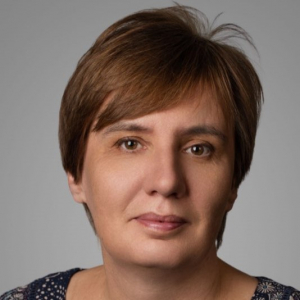
Ewa Manikowska, PhD
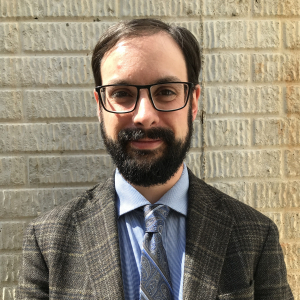
Dr. Peter O’Hagan

Prof. Sarah Panzer

Dennis Schäfer, M.A.
Scholarship holder:
Orel Beilinson, PhD
The Social History of Studying STEM (Science, Technology, Engineering, and Mathematics) in Modern Europe, 1750–2020
Why did the quantitative sciences dethrone the humanities as the queen of the sciences? Explanations often center on two revolutions. The Scientific Revolution, launching a rapid succession of discoveries, made science more thrilling. The Industrial Revolution, part of a rising knowledge economy, elevated previously less prestigious disciplines to the forefront of progress. Thus, science became more interesting and lucrative to pursue. My project seeks to question this teleology from a bottom-up perspective. It focuses on three waves of changing disciplinary priorities between the nineteenth century and our time: physics, economics, and data science. I am interested in labor markets, social prestige, family strategies, science outreach, government campaigns, funding agencies, and the humanities’ attempts to fight back. Thus, this project augments my previous work that re-examines the “modernization” of nineteenth-century Europe through the lens of young adults and their families.
About the scholarship holder
Orel Beilinson is a social historian of modern Europe in a Eurasian context. He received his Ph.D. with Distinction at Yale University in 2024. Since then, he has been a postdoctoral fellow at the Polonsky Academy for Advanced Study in the Humanities and the Social Sciences in Jerusalem. His work appeared in The Journal of Social History, the Journal of Austrian Studies, and the Journal of the Social and Economic History of the Orient, among others. It was supported by visiting fellowships in Budapest, Vienna, Ljubljana, Pisa, and Lisbon. He is currently finishing up his first monograph, “Tomorrow Belongs to Me: Coming of Age with Modern Europe.”
Stabi Collections
At the Staatsbibliothek zu Berlin, I will work with Schulschriften (“school publications”). This extensive collection includes yearbooks, biographies, curricula, institutional histories, principal speeches, popular writings, and other works through which we can reconstruct attitudes toward STEM subjects in the nineteenth century. Of particular interest are materials from German-speaking schools outside Central Europe. Their publications can illuminate the relationship between curricular priorities and social position (in this case, linguistic minority).
Scholarship holder:
Prof. Jessica M. Dandona, PhD
The Book of the Body: The 19th-Century Flap Anatomy as Body/Text
At the end of the nineteenth century, widespread access to reproductive technologies such as chromolithography and halftone printing was quickly transforming medicine into a profoundly visual profession. These advances made anatomical and medical literature available to a wider audience than ever before, facilitating the rapid circulation of knowledge, text, and image between professional and private spheres. One of the most striking examples of this new emphasis on scientific popularization and visuality is that of nineteenth-century “flap anatomies” — printed atlases of human anatomy that offered readers the opportunity to engage in a virtual dissection as they folded back layered illustrations of the body.
Produced in brilliant color and composed of dozens of superimposed images, flap anatomies decorated the walls of physicians’ offices, the desks of medical students, and the bookshelves of middle-class families in Britain, Europe, and the United States. Such works served as a bridge between the body and its representation by inviting viewers to explore a simulacrum of the corporeal form through both touch and sight. In these works, the visual text becomes a substitute for the body’s materiality at the same time that flesh itself becomes a text, its “truths” legible through both visual inspection and tactile exploration.
These movable books, which range in size from quarto volumes to life-size simulacra, moved between the popular and professional realms. Employing the same basic vocabulary and differing only in scale and complexity, they helped forge a shared understanding of the body defined by the conventions of anatomy. In the process, they affirmed the privileged status of anatomy as a visual and textual language for describing the body but also reinscribed older forms of knowledge within the framework of modern medical science.
About the scholarship holder
Jessica M. Dandona, Ph.D. is Professor of Art History in the Liberal Arts Department at the Minneapolis College of Art and Design. Dr. Dandona has been the recipient of research grants from the Fulbright Association, the Boston Medical Library, the American Philosophical Society, and other institutions. Research at the Staatsbibliothek will form the basis for two chapters of her current book project, The Transparent Woman: Medical Visualities in Fin-de-Siècle Europe and the United States, 1880–1900, which examines the visual culture of medicine at the end of the 19th century.
Scholarship holder:
Elena Fogolin, PhD
German printers in Rome in the 1470s-1480s: Book Output and Circulation
The spread of printing began in Germany, and as German printers ventured beyond their homeland, Italy became their first destination. The art of printing was introduced in Subiaco in 1465, with the first print shops appearing in Rome just two years later. For an extended period, the printing trade in Rome remained almost exclusively German. Numerous gaps persist in the scholarly study of Rome’s earliest printers, who have received relatively little attention. This study addresses bibliographical aspects that have not been systematically investigated, such as the pivotal transition from the one-pull to the two-pull press, which took place between the early 1470s and the beginning of the 1490s, alongside previously unnoticed copy-specific details. Furthermore, I will compile a comprehensive bibliographical profile for each incunable, documenting provenances, such as manuscript notes, inscriptions, and bindings—key to tracing their circulation and use. My methodology combines bibliographical and paleographical approaches, analyzing both the technical features of book production and the history of the individual copy.
About the scholarship holder
Elena Fogolin earned her Ph.D. in Linguistic and Literary Studies in December 2024 through a joint program between the Universities of Udine/Trieste and the Johannes Gutenberg-Universität Mainz. Her doctoral research was conducted as part of the Progetto di Interesse Nazionale (PRIN) titled “At the Dawn of Italian Publishing: Technology, Texts, and Books in Northern and Central Italy in the 15th and Early 16th Centuries.” Her Ph.D. project focused on German printers active in 15th-century Rome, early printing techniques, and the circulation of early printed books. During her doctorate, she was awarded short-term fellowships at Harvard and Princeton, enabling her to conduct hands-on studies of Roman incunabula preserved in these collections. Building on this work, she aims to expand her analysis of 15th-century Roman book production through a study of the incunabula preserved at the State Library in Berlin. She was also awarded two CERL Internship and Placement Grants: one at the Huntington Library in San Marino (2018/19) and another at the Biblioteca Nacional de España in Madrid (2022), enhancing her expertise in the study of early printed books.
Stabi Collections
Incunabula printed at Rome in the 1470s-1480s.
Scholarship holder:
Dr. Ariel Malachi
Al-Durra al-Muntakhaba (The Chosen Gem) and its Versions: From Text to Method
Zecharia ha-Rofé, a key 15th-century Yemenite Jewish thinker, wrote Al-Durra al-Muntakhaba as a complement to his Midrash ha-Ḥefetz, using allegory to express philosophical themes. The work’s long version, found in the Berlin manuscript, appears to be an early version, while later versions appear to be selective revisions, raising questions about Zecharia’s editorial choices. This research seeks to analyze Al-Durra’s textual and conceptual development, shedding light on its intellectual evolution and impact on Yemenite Jewish philosophy. By examining the primary sources, the study deepens our understanding of Yemenite Jewish thought, its development, and its legacy.
About the scholarship holder
Dr. Ariel Malachi’s research interests focus on the role and application of Aristotelian logic and epistemology in medieval Jewish thought, as well as Jewish philosophy in Yemen. His doctoral dissertation, titled Rationalism and Philosophy in Judah Halevi’s Thought: Logic, Epistemology, and Revelation in The Kuzari, was accepted in 2018. Since then, he has been teaching in the Department of Jewish Philosophy at Bar-Ilan University. Dr. Malachi is a member of the editorial board of Tema, a peer-reviewed journal dedicated to Judeo-Yemenite Studies. He is also a jurist, holding a Bachelor of Laws degree (LL.B.) from Bar-Ilan University.
Stabi Collections
Ms. Or. Qu. 554
Scholarship holder:
Ewa Manikowska, PhD
The Bildersammlung of the Prussian State Library. Contextualizing and unlocking the research and cultural potential of a rediscovered photographic archive
In my project, I aim to research and contextualise the recently rediscovered photographic archive (Bildersammlung) of the Manuscript Department of the Prussian State Library. This collection—comprising over 20,000 photographs of mainly illuminated manuscripts from major and minor public libraries in Europe, America, and Russia, as well as ecclesiastical collections and items that have appeared on the art. market—is, to my knowledge, one of the largest pre-war photographic archives of manuscripts in terms of size and breadth. Therefore, I will investigate its origins, complex history, meanings, uses, and the networks of actors involved, with the aim of framing it as an exceptional case study of photographic archives within manuscript departments. The Bildersammlung was transferred to present-day Poland during the Second World War, where it remained forgotten for several decades, severed from its original cultural and research context. Consequently, an important objective of this project is to explore its contemporary relevance. In particular, I will examine whether my research could provide a new perspective and focus for the study and discussion surrounding the “Berlinka”: the holdings of the former Prussian State Library that are currently preserved in Poland.
About the scholarship holder
Ewa Manikowska is assistant professor at the Institute of Art of the Polish Academy of Sciences. She holds a PhD in art history and a European doctorate in social history and the Mediterranean. Her research interests encompass the history of collecting, survey photography, cultural heritage, provenance research and art restitution. She has both an academic and a museum curriculum, with previous experience as a provenance research specialist at the National Museum in Warsaw. She is currently engaged in the establishment of an interdisciplinary provenance research centre within her home institution.
Stabi Collections
Manuscript Department
Scholarship holder:
Dr. Peter O’Hagan
Peter Lombard’s Magna Glosatura on the Pauline Epistles: A New Beginning
In the mid-twelfth century, there was an educational revolution in Paris, known as scholasticism, from which medieval universities would arise. One of the central teachers in this revolution was Peter Lombard (†1160), whose writings were fundamental for the theological curriculum of the university of Paris. My project is the first extensive study of the manuscripts of one of Lombard’s most important works, his Magna Glosatura on the Pauline Epistles (MG). My objective is to identify the earliest version(s) of the text, as a basis for a critical edition. In addition, I want to understand scholasticism as an international phenomenon – it began from Paris, but quickly became European in scope. Manuscripts of Lombard’s works, for example, spread across Europe already during his lifetime, including to Germany. In particular, in additional to several other manuscripts of the MG, Stabi contains two manuscripts, one of the MG and one of Lombard’s magnum opus, the Sentences, which are of significantly early date, donated to Liesborn Abbey by its abbot Franco (†1178). Given the connection between these two texts in Lombard’s teaching career, these two MSS are important witnesses to the early stages of Lombard’s work, and promise to shed new light on his thought and its impact beyond Paris.
About the scholarship holder
Dr. Peter O’Hagan – Assistant Professor of History, Christendom College (USA). Research interests include history of biblical exegesis with a focus on the Pauline Epistles; the development of the 12th-century schools and scholastic thought; the career and thought of Peter Lombard. Dissertation (defended July 2017), “Teaching the Tradition: Twelfth-Century Commentaries on Paul’s Letter to the Romans”. He has published articles on medieval biblical exegesis and on Peter Lombard in Traditio (2018), Recherches de Théologie et Philosophie médiévales (2021), and Archa Verbi (2024), as well as in peer-reviewed monographs. His current project, towards which this fellowship will contribute, is the preparation of a monograph, Peter Lombard’s Magna Glosatura on the Pauline Epistles: A New Beginning, to be published by Catholic University of America Press. His numerous oral presentations include papers delivered at the Annual Meeting of International Society for the Study of Medieval Theology (Torun, June 2023), the International Congress on Medieval Studies (Kalamazoo, USA, May 2023, 2024), and the Patristic, Medieval, & Renaissance Conference (Villanova University, USA, Oct. 2018).
Stabi Collections
- Berlin, Staatsbibl. Theol. 352 (Lombard’s MG) and 331 (Lombard’s Sentences)
- Berlin, Staatsbibl. Theol. Fol. 198 (Lombard’s MG)
- Berlin, Staatsbibl. Theol. Fol. 210 (Lombard’s MG)
- Berlin, Staatsbibl. Theol. Fol. 448 (Lombard’s MG)
Scholarship holder:
Prof. Sarah Panzer
German-Austrian Prisoners of War (POWs) in Japan during the First World War
The German and Austrian prisoners of war interned in Japan during the First World War had the dubious privilege of observing the entire trajectory of German mobilization, defeat, and revolution from afar. In my project, I examine the network of POW camps in which they were housed as sites of identity translation, representation, and reproduction, with the goal of analyzing how prisoners’ relationship to ‘Germanness’ evolved over the course of the war. What emerged was a distinctly ‘soft power’ framing of German Kultur, which simultaneously enabled prisoners to articulate a shared identity independent of state or political allegiance and to construct a culturally-defined German ‘brand’ identity compatible with defeat. The mobilization of German culture within these POW camps complicates existing narratives of how German soldiers and veterans responded to the dismantling of the German Empire, and the relationship between this experience and the radicalization of interwar politics.
About the scholarship holder
Dr. Sarah Panzer is Associate Professor of Modern European History at Missouri State University. She completed her PhD at the University of Chicago. Her dissertation won the 2015 Fritz Stern Dissertation Prize, awarded by the German Historical Institute. Her recent publications include “Honorary Aryans? Japanese Germans Mischlinge and the Negotiation of Identity in Nazi Germany,” Contemporary European History (2023), “The Archer and the Arrow: Zen Buddhism and the Politics of Religion in Nazi Germany,” Journal of Global History (2023), and “Death-Defying: Voluntary Death as Honorable Ideal in the German-Japanese Alliance,” Central European History (2022). She is currently finishing her first monograph, A Brave New World: Modern Japan and the German Revolt against the West, which examines the German-Japanese relationship during the first half of the twentieth century as an anti-globalist project.
Stabi Collections
- Bandō-Sammlung
Scholarship holder:
Dennis Schäfer, M.A.
From Authors to Archives: The Amanuensis in the Age of Goethe
My doctoral dissertation is the first study on the role of the amanuensis in Germany around 1800. Particularly, I am interested in the way how such secretaries or copyists assisted authors in their production of literary texts and what function they served in the preservation of literary manuscripts. In my analysis, I peruse a host of literary and epistolary manuscripts from the Goethe Schiller Archiv in Weimar, the Freies Deutsches Hochstift in Frankfurt, the Morgan Library & Museum in New York and other. Central literary texts for my study include Goethe’s Aus meinem Leben: Dichtung und Wahrheit, E.T.A. Hoffmann’s Der goldne Topf, and Jean Paul’s Die Flegeljahre. At the Berlin State Library, I will work on the Nachlass of Jean Paul and survey the different drafts and other paraphernalia surrounding the Flegeljahre in pursuit of Jean Paul’s elusive amanuenses. As a secondary research project, I will be completing a critical edition of a recently discovered E.T.A. Hoffmann fragment.
About the scholarship holder
Dennis Schäfer is a Ph.D. Student in the Department of German Princeton University. He is interested in German media culture from the late 18th to the early 20th century. His work has appeared in the E.T.A. Hoffmann-Jahrbuch, the Goethe Jahrbuch and the Zeitschrift für Germanistik and he has been co-editor of special issues in Das achtzehnte Jahrhundert and the Publications of the English Goethe Society, as well as a recent anthology of E.T.A. Hoffmann adaptations. His research has been supported by fellowships from the Goethe Gesellschaft Weimar, the Klassik Stiftung Weimar, and the Princeton Institute of International and Regional Affairs, and he was awarded the 2023 Research Prize by the Princeton University Library. Dennis is an avid bibliophile who collects E.T.A. Hoffmann limited and illustrated editions and a member of the Grolier Club.
Stabi Collections
- Nachlass Jean Paul
-
E.T.A. Hoffmann Archiv
Die Stipendiat:innen 2024
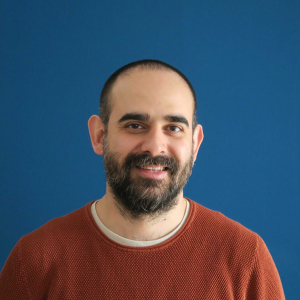
Ercan Akyol, PhD

Dr. Stanisław Boridczenko
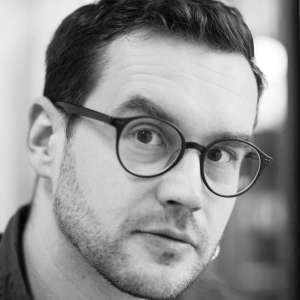
Lukáš Kubík
Forrest Cale McSweeney

Sanjiao Tang, PhD
Stipendiat:
Ercan Akyol, PhD
Kontextualisierung der frühneuzeitlichen osmanischen Kulturgeschichte
Mein Projekt mit dem Titel Kontextualisierung der frühneuzeitlichen osmanischen Kulturgeschichte, versucht, die beruflichen und literarischen Beziehungen der osmanischen Gelehrten, Bürokraten und Dichter der frühen Neuzeit in ihren historischen Kontext zu stellen. Anhand eines breiten Spektrums von Archivdokumenten sowie einer umfangreichen Sammlung von Manuskripten und Briefen untersucht meine Studie, wie sich die osmanische Elitekultur durch die Interaktionen zwischen Staatsbeamten, Gelehrten, Gönnern, Protegés, Feinden, Freunden und Schriftstellern/Dichtern entwickelte. In diesem Zusammenhang wird die Sammlung frühneuzeitlicher osmanischer Handschriften der Staatsbibliothek Berlin das Kernmaterial meines Projekts bilden. Durch diese Sammlung werde ich untersuchen, wie die osmanische Schriftproduktion, einschließlich Texten aus den Bereichen Literatur, Geschichte, Medizin usw., die Elitenkultur durch soziale, emotionale, intellektuelle und berufliche Interaktionen prägte.
Blogbeitrag: 16th-17th Century Manuscripts and Letter-Writing Manuals in the Staatsbibliothek zu Berlin
Auszüge im SBB-PK Blog-Netzwerk für Forschung und Kultur
Über den Stipendiaten
Ercan Akyol (PhD) ist Senior Lecturer für Turkologie an der Universität Wien. Seine Forschungsschwerpunkte liegen im Bereich der frühneuzeitlichen osmanischen Kulturgeschichte. In seiner Dissertation beschäftigt er sich mit der osmanischen Literaturkultur des frühen 17. Jahrhunderts. Im Rahmen seiner Dissertation interessiert er sich besonders für die Literaturgeschichtsschreibung, die osmanische Paläographie, die Manuskriptkultur und die Kontextualisierung der frühneuzeitlichen osmanischen Literatur. Er hat verschiedene Artikel und Lexikoneinträge zur modernen türkischen und frühneuzeitlichen osmanischen Geschichte, Literatur und Kultur veröffentlicht.
Stabi Collections
- Münşeat-ı Nadiri – Ms. or. oct. 2122
- Münşeat-ı Nergisi – Ms. or. oct. 3680
- Münşeat – Ms. or. oct. 2632
- Fazilet-i Şam – Ms. or. fol. 3332
- Ahkam-ı Nücum – Ms. or. oct. 2734
- Kıyafetname – Ms. or. oct. 2821
- Kitab el-aqtab – Ms. or. oct. 3638
- Qıyafetname – Ms. or. oct. 1099
- Kitab Hermes el-Heramise – Ms. or. oct. 1983
- Falname – Ms. or. oct. 2639
- Neticetü’t-tıb – Ms. or. oct. 2276
- Müfredat – Ms. ort. quart 1530
- Rahat en-nüfus – Ms. ort. oct. 1128
- Tercüme-i Bahname-i Padişahi – Ms. or. oct. 1063
- Tercüme-i Bahname-i Padişahi – Ms. or. oct. 3539
- Bahname – Ms. or. quart 1438
- Kitab-ı maqbul der hal-i huyul – Ms. or. oct. 3011
- Düsturü’l-amel – Ms. or. oct 986
- Manzume – Ms. or. oct. 2374
- Zahir el-qudat – Ms. ort. oct. 2946
- Matlab-ı aşq-ı aşıq ve maşuq – Ms. ort. oct. 985
- Razname – Ms. ort. oct. 2394
- Razname – Ms. ort. oct. 2509
- Münşeat-ı Okçuzade – Ms. or. quart 1855
- Gayet el-beyan fi tedbir-i beden el-insan – Ms. or. quart 1588
- Divan-ı Bülbüli – Ms. ort. oct. 3263
- Mecmua-i Eşar – Ms. ort. quart 1741
- Cami el-hikayat – Ms. or. oct. 3241
- Hikayet-i qadi ve düzd – Ms. or. quart 1988
- Şütürname – Ms. ort. quart 1988
- el-fulk el-meşhur bi-l-lulu el-meknun – Ms. or. fol. 4107
- Felahatname – Ms. or. oct. 3664
- Terceme-i İncil – Ms. or. oct. 3960
Scholarship holder:
Dr. Stanisław Boridczenko
Do We Need Any Colonies at All? Different Ways of Perception of the Russian
Imperialist Status by the Intelligentsia in the Russian Empire of Nicholas II
In my project, I want to decipher the understanding of Russia’s imperialist identity during the era of Nicholas II by shedding light on the perspective of the Russian intelligentsia. I will scrutinise the press discourse and determine the image of the relationship between the imperial core and the colonies. My main aim is a modest attempt to create a model that clarifies the nature of the links between nationalism and imperialism. The press discourse will serve as a base to test my initial hypothesis and understand the intricate interplay between ethics, philosophy and the desire for ethnic supremacy among the Russian intelligentsia between 1894 and 1917. This project is significant in two ways: as a traditional historical enquiry and as a contemporary exploration with implications for cultural studies and philosophy that respond to both universal academic interests and the current regional landscape.
Online Lecture on 21 November 2024
Blog article: Rethinking Empire in Nicholas II’s Russia: The Victimized Heartland
About the scholarship holder
Dr Stanisław Edward Boridczenko – research assistant at the Institute of History, University of Szczecin (Poland). In July 2023 he defended his dissertation entitled. „The portrayal of Polish-Russian relations in the school literature of the Russian Empire (1721-1917)“. In 2022 he was awarded a scholarship from the Minister of Education and Science (Poland) for outstanding young scientists. His research interests include the study of empires and imperialism as well as the phenomenon of national/state indifference (especially in the context of the Polish–Russian frontier). He has been awarded research fellowships in London, Vienna, Prague, Moscow, Brest, Minsk, Brunswick, Warsaw and Marburg.
Stabi Collections
I am particularly interested in the special collection of the Library, namely the regionally defined collection on Eastern Europe (Osteuropa), which contains numerous sources on the subject of my project. By this I generally mean the Russian press from 1894 to 1917, i.e. the years of the reign of Nicholas II, which is available in the Library. The database contains more than 10,000 titles. Considering that each title consists of at least several different issues, the number of sources held by the Library can be described as huge. The selection of sources on the basis of their content analysis is therefore the first step in my research.
Scholarship holder:
Lukáš Kubík
Maritime Confrontations with Japan in Korean Historical Sources
Lukáš’s research project at the Staatsbibliothek zu Berlin is called Maritime Confrontations with Japan in Korean Historical Sources. It aims to access primary source materials and historiographical works related to this era, such as Tongguk t’ongkam chekang 東國通鑑提綱 (The Basic Framework of the Comprehensive Mirror of the Eastern Kingdom), Yŏsachekang 麗史提綱 (Annotated Outline of Koryŏ History), and cartographic records such as Haedong chegukki 海東諸國紀 (Records of Countries Across the Sea to the East). Furthermore, he will access the acquisition of the late Prof. Hans-Jürgen Zaborowski (1948-2021), who dedicated his research to Korean history and to Confucian scholar Yi Saek (李穡), who witnessed the end of Koryŏ, contributing a first-hand perspective to this critical historical era.
Blog article: (Un)official Korean Sources on late Koryŏ in the Staatsbibliothek zu Berlin’s East Asian Collection
Online Lecture on 5 May 2025
About the scholarship holder
Mgr. Lukáš Kubík is a PhD candidate at the Institute of Asian Studies, Faculty of Arts, Charles University in Prague. He holds a master’s degree in Korean studies. Lukáš’s research interests include premodern East Asian history, the history of Korea, and the Cold War relations between Czechoslovakia and the Korean peninsula. He is currently working on his doctoral thesis called Japanese Pirates, Fire Cannons, and War Ships: An Examination of Koryŏ’s Response to Piracy during the Reign of King Kongmin (1351–1374), which delves into medieval maritime piracy and international relations during the late Koryŏ period of the 14th century. His research was supported by the Kyujanggak Institute for Korean Studies, the Academy of Korean Studies (as a Graduate Fellow), and the Korean Foundation PhD Fellowship. Currently, he is also part of Czechoslovakia and the Korean peninsula during the Cold War project, where his research primarily centres on the political history and diplomatic exchanges between the DPRK, CSSR, and third-world countries.
Scholarship holder:
Forrest Cale McSweeney
Medicine at Arms: Medicine, the State, and the Military in Imperial
and Republican China
Documents gathered from Staatsbibliothek of Berlin will now allow the scholar a window into the specific usages at the individual level of formula confirmed to have been distributed to Qing soldiers. The Qing state was enormously pragmatic in its military medical practices, distributing formula to soldiers the court itself made extensive use of, as well as drawing from outside of the scope of the Qing’ medical orthodoxy. What exactly those formula were generally expected to do, though, and for what specific purposes they were distributed is not as clear. Of the limited evidence for what Qing soldier actually used the formula for, the image is extraordinarily eclectic, with formula routinely acknowledged in larger medical discourse to serve some purposes retrofitted for totally different applications. the formula pinganwan 平安丸, for example, was distributed more aggressively than perhaps any other pharmaceutical in the entire state sector during the Qing, but its application in and outside of court was utterly manifold. Documents from the Berlin libraries allow for a more granular understanding of the private understanding of the application of specific formula. Preliminary research allows for a tentative hypothesis, that state use and private use was likely significantly divergent. For example, the 1852 xingjunfangbianbianfang行军方便便方Convenient Formulas for the Campaigning Army by Luo Shiyao claimed to comb medical texts from across history for effective combat related formula. However, of more than 90 formulas confirmed to have been distributed to soldiers and, at times, directly requested by military commanders and banner officials in the field in the Qing, none are among the formula listed by Luo’s text. This is direct evidence of a gap between private and state practice which can serve to sharpen our understanding of an enormously complex Qing and Republican medical discursive field.
Lecture on 20 June 2024, see recording
Blog article: Military Drugs and Medical Texts: The Berlin Chinese Medical Manuscripts and Patterns of Consumption in the Mid to Late Qing
About the scholarship holder
I am a Doctoral Candidate at the University of Illinois Urbana-Champaign studying military medicine in late imperial China and the Republican Period. I am originally from Birmingham, Alabama. I have lived and studied in China and Taiwan. Aspects of my research closely related to this documentary search will be presented in 2024 at the annual Association of Asian Studies Conference in Seattle, Washington in my panel entitled Medicine for the Military: Institutions, Ideologies, and Therapies in Imperial China featuring Robin Yates- McGill University, Sare Aricanli- Durham University, Chang Xu- Washington University- St. Louis, myself, and with the esteemed Yi-Li Wu from the University of Michigan as discussant.
Stabi Collections
- Berlin Chinese Medical Manuscripts
Scholarship holder:
Sanjiao Tang, PhD
An Exploration of China’s Campaign of Mass Mobilization and Militarization
during the Mao Era: Based on the Valuable Sources at the Berlin State Library
Based on the valuable materials in the Berlin State Library, my research aims to explore China’s campaign of mass mobilization and militarization that Mao Zedong launched in the late 1950s. Driven by the international tensions in the Cold War context, this mass campaign lasted until the 1970s. Across the country, hundreds of millions of urban and rural residents were involved, especially those born in the 1950s. With difficulty in accessing research materials from China, it is very fortunate for an international researcher to find the plentiful and unique primary and old sources in the Berlin State Library. The result of my project can help reexamine the history of Communist China from the bottom-up perspective. In addition, through paying attention to the mobilized and militarized experiences of Mao-era young people, most of whom are still alive, the research helps better understand the legacies of Mao that remain alive in China today.
Lecture on 14 May 2024
Blog article: Mobilised and Militarised Childhood: A Sample Schedule and Account of a 1960s-born Chinese Pupil in Two Days
About the scholarship holder
Sanjiao Tang received his Ph.D. from the University of Auckland in December 2021. His doctoral dissertation is “Everyday Life during the Cultural Revolution in Sichuan Province”. After graduating, he received several grants from a number of universities and institutions in different countries, including the research grant provided by the Hoover Institution Library & Archives at Stanford University. His primary research focus is life in Mao’s China. Based on large numbers of primary and old sources, his Ph.D. dissertation and publications add to the literature on Mao’s China by examining and analyzing from the bottom-up, peripheral, and everyday perspectives.
Stabi Collections
- Wang Min 王敏. Female Militia 女民兵: 四幕六场话剧. Beijing: Qunzhong Chubanshe, 1961.
- Heilongjiang sheng gewutuan 黑龙江省歌舞团 Female Militia in the Commune: dance 公社女民兵:舞蹈. Beijing: Renmin yinyue chubanshe, 1977.
- Zhongguo renmin jiefangjun Nanjing budui zhengzhibu xuanchuanbu 中国人民解放军南京部队政治部宣传部.
- Minbinghao Set Sail: Selections of Militias‘ Singing 民兵号出航: 民兵演唱选. Beijing: Nongcun duwu chubanshe, 1975.
- Jiefangjun Henan junqu 解放军河南军区. Ten Years of Henan Militias 河南民兵十年. Zhengzhou: Henan renmin chubanshe, 1960.
- Zhang Jingwu 张经武. „Strengthen the work of militias“ „加强民兵工作.“ Shan Xi Sheng Ren Min Zheng Fu Gong Bao 12 (1950): 93.
- „Guanyu minbing renwu he jiejue minbing wugong wenti de lianhe zhishi““關於民兵任務和解决民兵誤工 問題的聯合指示(轉載).“ Jiang Xi Sheng Ren Min Zheng Fu Gong Bao 10 (1953): 9.
- Nanjing junqu zhengzhibu 南京军区政治部. East Sea Militias 东海民兵. (monthly journal), 1966.