Das Blog-Netzwerk der Staatsbibliothek zu Berlin – Beiträge für Forschung und Kultur

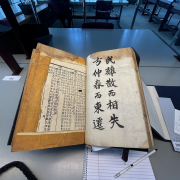
(Un)official Korean Sources on late Koryŏ in the Staatsbibliothek zu Berlin’s East Asian Collection

Gastbeitrag von Lukáš Kubík During the mid‑fourteenth century, East Asia experienced a period of profound changes, labelled by researchers as the Great Chinggisid Crisis, corresponding to Europe’s Crisis of the late Middle Ages. This era was marked by significant climate changes, leading to several disasters, including natural calamities, famines, and plagues. These events set the […]
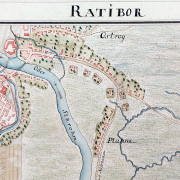
On an attempt to reconstruct the image of Silesian towns in the 18th century on the basis of historical cartography: Kriegskarte von Schlesien

Gastbeitrag von Prof. Monika Ewa Adamska I’ve been conducting research in the Silesia area, which has been a historically contested region in Central Europe for many years, focusing on the transformations of its historical rural and urban structures, colonisation processes, the issues of post-war rebuilding and contemporary revitalisation processes. For a brief introduction to the […]

„Das Innerste der Welt ist Einsamkeit“. Vicki Baums Roman ‚Ulle, der Zwerg‘

Indie Stabi – unabhängige Verlage stellen sich vor. Ariella Verlag trifft MaroVerlag

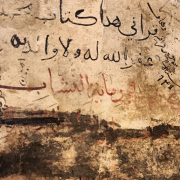
A Book in Archery: “Kitāb fī rimāyat al-nuššāb” – Mamluk Chivalry Manuscript Preserved at Staatsbibliothek zu Berlin (Landberg 42)

Gastbeitrag von Dr. Mohamed Ibrahim The abundance of Muslims in their home region has greatly influenced their ability to conquer other countries. Their war science has been developing daily along with the evolution of weapons and their variety; what has been brought to us in this field is evidence of this. The great Islamic civilization has […]

Der International Standard Content Code (ISCC) – warum Bibliotheken, Archive und Museen ihn nutzen sollten

Ende Mai 2024 wurde mit der ISO 24138:2024 der International Standard Content Code (ISCC) als neuer internationaler Standard aus der Familie der Identifier verabschiedet. Im Gegensatz zu etablierten Identifiern wie DOI oder URN, die praktisch ein Werk als Produkt, also z.B. eine Verlagsveröffentlichung, identifizieren, bezieht sich der ISCC auf die Mediendatei selbst. Treibende Kraft hinter […]